When people begin clear aligner treatment or other orthodontic care, they usually expect conversations about trays, braces, scans, and timelines. What often surprises them is hearing about a procedure called interproximal reduction, commonly shortened to IPR. The name sounds technical, and that alone can make patients uneasy. Many assume it means something aggressive or harmful to the teeth.
In reality, IPR is usually a very small, controlled adjustment that can play an important role in making orthodontic treatment more effective. When recommended appropriately, it helps create the space needed to guide teeth into better positions without compromising the overall treatment result. It is not done in every case, and it should never be treated casually, but it is a well-established technique used in modern orthodontics for the right reasons.
The problem is that patients often hear about it without fully understanding why it is being suggested. If they do not understand the purpose, they may resist it, delay treatment, or assume it is being added unnecessarily. That is why it helps to explain IPR clearly and honestly.
Maintain a healthy smile by brushing and flossing daily, visiting the dentist regularly, eating a balanced diet, avoiding sugary foods, staying hydrated, and using mouthwash for added protection.
What is interproximal reduction?
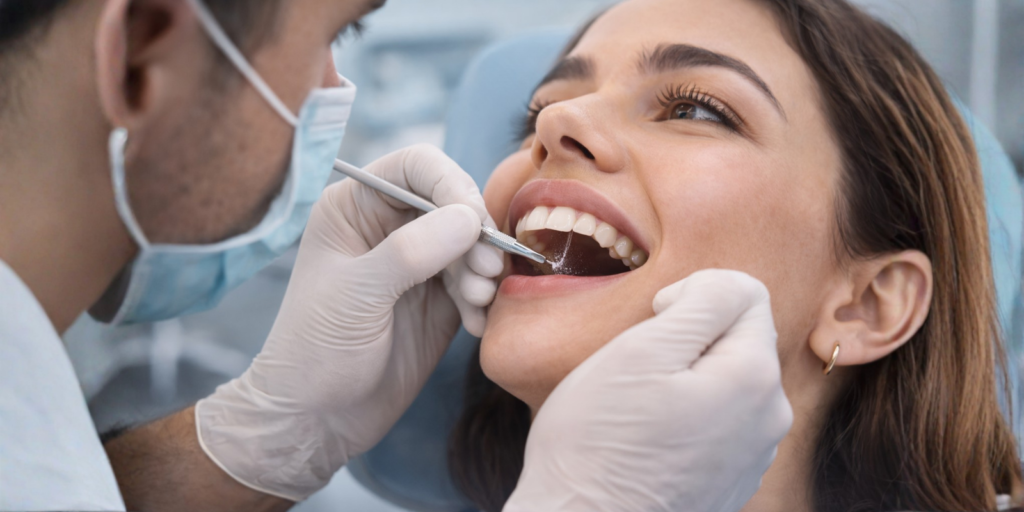
Interproximal reduction is the controlled removal of a very small amount of enamel from between certain teeth. The goal is usually to create a little extra space so the teeth can move more effectively during orthodontic treatment.
This is not the same as drilling a tooth for a filling, and it is not the same as damaging the structure of the tooth. When performed properly, IPR involves reducing only a minimal amount of enamel in carefully selected areas. It is planned in advance as part of the orthodontic strategy, not done randomly during treatment.
The amount removed is usually small enough that patients do not notice a visible difference in tooth shape once treatment is complete. What they are more likely to notice is that the teeth align more effectively and the final result looks more balanced.
Why space matters in orthodontic treatment
Teeth do not move well when there is nowhere for them to go. In many orthodontic cases, especially those involving crowding, the clinician needs to create some space before the teeth can be positioned properly. That space can come from a few different approaches depending on the case.
Sometimes space is gained through arch development or the natural movement of teeth. In some cases, extractions are needed. In others, only a very small amount of additional room is required, and that is where IPR may become useful.
This is one reason 3D orthodontic treatment planning is so important. The decision to use IPR should not be made casually. It should come from a careful assessment of crowding, tooth proportions, bite goals, and the overall treatment plan.
When is IPR usually recommended?
IPR is most often recommended when the case needs a modest amount of space rather than a major intervention. It can be particularly useful in aligner treatment, where small amounts of space can improve movement predictability and reduce the need for more aggressive alternatives.
Common situations where IPR may be considered include:
- mild to moderate crowding
- improving tooth alignment without extractions
- helping close small black triangles between teeth
- improving tooth proportions for a better final appearance
- supporting more stable final contact points between teeth
The key point is that IPR is not an isolated procedure. It is part of a broader treatment strategy. If a clinician recommends it, the real question should not be “Why are you shaving my teeth?” The better question is “What problem is this helping solve in my case?”
Why IPR is often used with clear aligners
Clear aligners work best when tooth movement is carefully planned and supported by the right conditions. If there is not enough room for teeth to move into alignment, the trays may struggle to achieve the intended result efficiently. That can lead to tracking issues, slower progress, or extra refinement stages.
In some aligner cases, IPR helps create the small amount of space needed to keep the treatment moving in a more controlled way. It can also reduce the need to push teeth outward in a way that may not be ideal for the bite or facial profile.
Patients sometimes assume that because aligners are removable and look simple, the treatment itself should also be simple. That is not how orthodontics works. Even a treatment option that appears discreet can involve very careful decisions behind the scenes. IPR is one of those decisions. It may look minor, but it can make the difference between a case that finishes cleanly and one that drifts into avoidable complications or prolonged correction.
That is also why it naturally connects with aligner refinements [Internal link to Blog #3: Aligner Refinements: What They Are, Why They Happen, and How to Minimize Them]. In some cases, well-planned IPR can help reduce the risk of unnecessary refinements by making the original movement sequence more realistic and achievable.
Is IPR safe?
This is the question most patients care about most, and rightly so.
When performed correctly and in the right amount, IPR is generally considered safe. The enamel reduction is small, controlled, and planned with clear limits. Orthodontists and trained dental professionals do not remove enamel blindly. They measure, monitor, and perform it only where it supports the treatment goal.
That said, “safe” does not mean “should be done casually.” The provider must evaluate whether IPR is appropriate, how much space is actually needed, and which teeth are suitable candidates. Overuse or poor execution would be a problem, which is why experience and planning matter.
Patients should feel comfortable asking:
- why IPR is being recommended
- how much enamel will be removed
- which teeth will be involved
- whether there are alternative ways to create space
A good provider should be able to answer those questions clearly. If the explanation sounds vague or improvised, that is a warning sign. IPR should always feel like part of a deliberate plan, not a last-minute idea.
Does IPR hurt?
In most cases, IPR is not described as painful. Some patients feel pressure or mild discomfort, but it is usually brief and manageable. The sensation tends to be more unusual than painful, especially for people who have never experienced dental procedures beyond routine cleanings.
The bigger issue is often anxiety rather than physical discomfort. The thought of enamel being reduced can sound worse than the actual experience. That is why clear communication matters so much. Patients who understand the purpose of the procedure generally tolerate it better than those who hear about it suddenly and assume something harmful is being done.
After IPR, some people notice that the teeth feel slightly different when flossing or touching them with the tongue, but this is usually temporary as treatment continues and the spaces are used as intended.
Does IPR damage teeth in the long run?
This concern is understandable because enamel does not grow back. That fact alone makes many patients nervous. But the answer depends on whether the procedure is being done conservatively and appropriately.
Small, carefully controlled enamel reduction within accepted limits is different from damaging a tooth. The goal is not to weaken the teeth but to create a precise amount of room that improves treatment efficiency and final alignment. When performed properly, IPR is generally not associated with the kind of structural damage patients often fear.
What would be more concerning is forcing teeth into movement without enough space, or pushing treatment toward shortcuts that create bite instability or poor finishing. In other words, avoiding IPR at all costs is not always the safer choice. In some cases, refusing it may actually make treatment more difficult or less effective.
That is where professional 3D treatment planning becomes relevant again. Decisions like IPR should be based on a full understanding of the case, not on generic assumptions or one-size-fits-all treatment models.
Can IPR improve the final appearance of the smile?
Yes, in the right case it can.
Most patients initially think of IPR as just a way to create space, but it can also contribute to the look of the final result. For example, if certain teeth are slightly wide relative to the available space, reducing a very small amount of enamel may help improve proportion and alignment. In some cases, IPR is also used to help reduce small dark gaps near the gumline, often called black triangles.
This matters because orthodontic treatment is not only about lining teeth up in a straight row. It is also about how the teeth fit together visually and functionally. When IPR is used thoughtfully, it can support both.
When IPR may not be the right choice
IPR is useful, but it is not the solution for every case. If too much space is needed, or if the tooth shape and enamel thickness do not make it appropriate, other treatment options may be better. Some patients may need a different strategy entirely depending on crowding severity, bite concerns, or broader orthodontic goals.
That is why patients should not think of IPR as a standard step that automatically comes with aligners or braces. It is a case-specific tool. Good orthodontic treatment is built on choosing the right tool for the right problem, not using the same approach on everyone.
Final thoughts
Interproximal reduction sounds more intimidating than it usually is. In practice, it is often a small, carefully controlled step that helps create the space needed for better tooth movement, more efficient treatment, and a stronger final result. It is not done in every case, and it should never be recommended without a clear reason, but when used properly, it can be a very effective part of orthodontic care.
Patients should not judge IPR by the name alone. They should judge it by the quality of the explanation, the planning behind it, and how naturally it fits into the broader treatment strategy. If the provider can clearly explain why it is needed and how it supports the outcome, that usually signals a more thoughtful approach to care.
The goal is not to remove enamel for the sake of convenience. The goal is to create the right conditions for treatment to work properly. In the right case, that can be a smart and valuable decision.